The Knights Templar were elite medieval warrior monks forged by faith, discipline, and brutal combat. Explore their origins, training, weapons, battlefield tactics, and lasting warrior legacy.
More Than Knights, More Than Monks
The Knights Templar were unlike any fighting force the medieval world had ever seen. They were not mercenaries, feudal knights, or wandering crusaders seeking glory. They were professional warriors bound by sacred oaths, living lives of discipline, austerity, and constant readiness for battle.
To enemies, they were relentless and terrifying.
To allies, they were dependable and unbreakable.
To history, they became legend.
The Templars embodied a rare fusion of faith, structure, and violence, creating one of the earliest examples of a standing elite military order in Western history.
The Origins of the Knights Templar: Born From Chaos
The Knights Templar originated around 1119 AD, following the First Crusade. Although Jerusalem had been captured, the surrounding lands remained extremely dangerous. Pilgrims traveling to holy sites were frequently attacked, robbed, or killed.
A small group of knights, led by Hugh de Payens, swore to protect these travelers. Their vow was radical: they would live not as wealthy nobles, but as “Poor Fellow-Soldiers of Christ.”
They were granted quarters near what was believed to be the site of Solomon’s Temple, giving rise to their name — Templars.
At first, they were few in number, poorly equipped, and largely ignored. But what they lacked in resources, they made up for in discipline, unity, and purpose.
Who Were the Knights Templar?
The Knights Templar were a religious military order, sanctioned by the Catholic Church and answering directly to the Pope. This made them independent of kings, nobles, and feudal obligations — an unprecedented level of autonomy.
Members came primarily from:
- French and Norman knightly families
- other European noble lineages
Once sworn in, a Templar abandoned personal ambition. Wealth, titles, and inheritance no longer mattered. Identity was replaced by brotherhood.
Their lives followed a rigid routine:
- prayer
- physical labor
- weapons training
- combat readiness
This strict structure transformed individual knights into a cohesive fighting machine.
Training the Warrior Monk
Templar training was relentless and continuous. Unlike feudal knights who trained sporadically, Templars treated warfare as a full-time profession.
Foundations of Their Training:
- European knightly combat traditions
- battlefield experience from Crusader wars
- tactical exposure to Eastern and Muslim fighting methods
Veteran knights served as combat masters, drilling recruits in:
- sword and shield fighting
- mounted combat and cavalry charges
- formation discipline
- endurance under stress and injury
More important than technique was obedience. Individual heroics were discouraged. Survival depended on maintaining formation and following orders without hesitation.
This mindset mirrors modern military and martial arts principles: structure defeats chaos.
Weapons and Armor of the Knights Templar
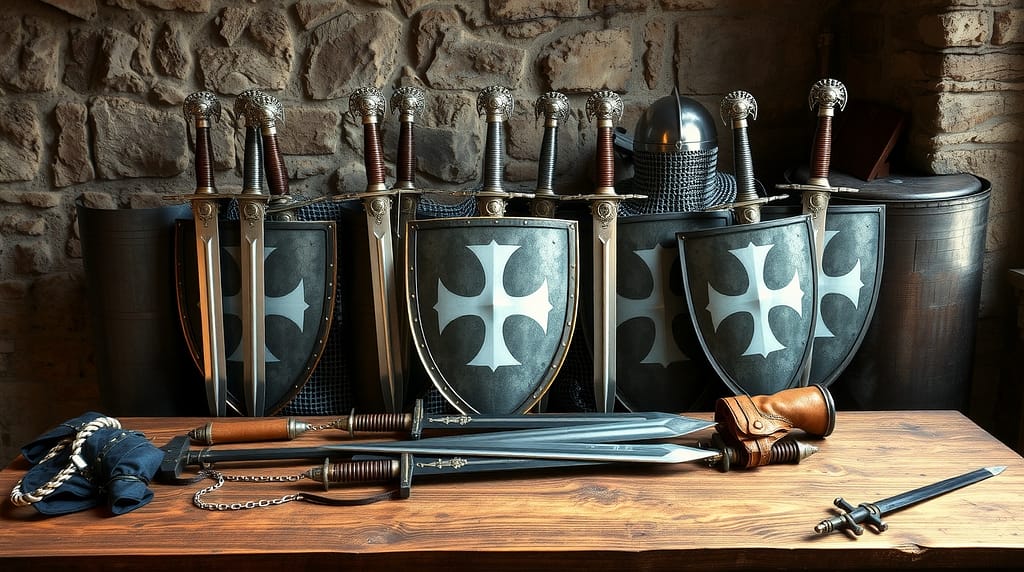
The Templars were heavily armored shock troops designed to break enemy lines.
Weapons:
- arming swords and longswords
- lances for mounted charges
- daggers for grappling and finishing
- maces and blunt weapons against armored foes
Armor:
- chainmail hauberks
- padded gambesons
- iron helmets (nasal helms, later great helms)
- large shields for formation defense
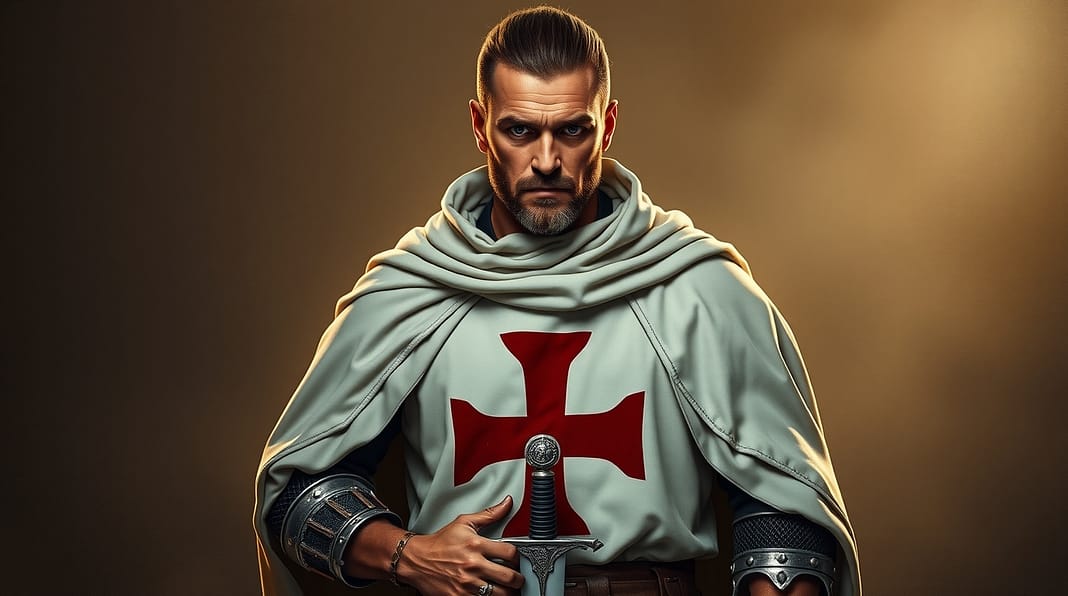
Their iconic white mantle with the red cross symbolized purity and sacrifice — but on the battlefield, it marked them as warriors who would not retreat.
Battlefield Tactics and Reputation
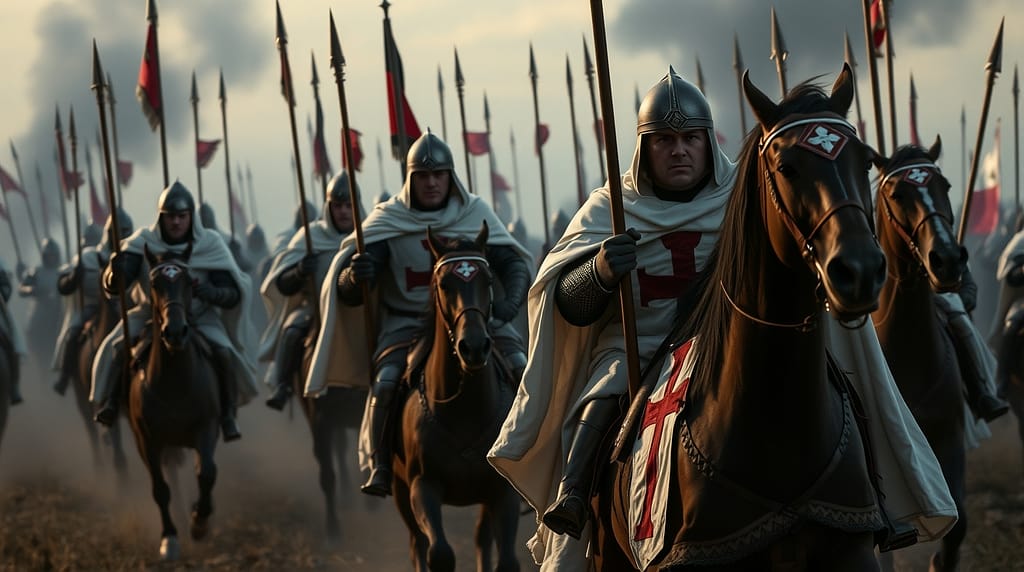
The Knights Templar were often deployed at the front lines. Once committed to combat, withdrawal was forbidden unless ordered by a superior.
Their tactics emphasized:
- heavy cavalry charges
- tight formation fighting
- disciplined advances under fire
Contemporary Muslim chroniclers described them as:
- fearless
- stubborn
- unnervingly disciplined
Unlike other knights who might break ranks, Templars held the line, even when surrounded.
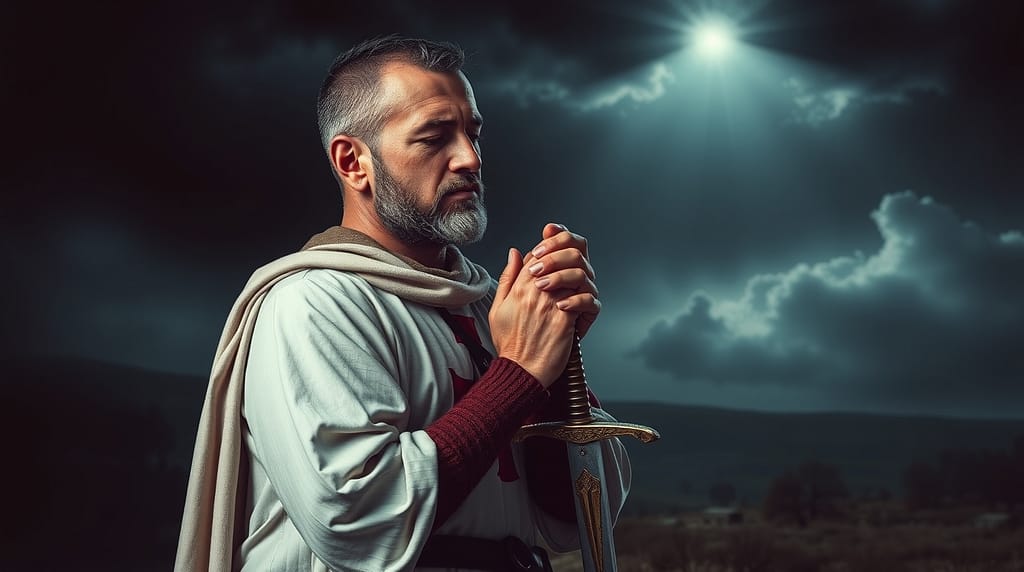
Code, Discipline, and Mental Conditioning
The Templars followed a strict warrior code that regulated:
- speech
- behavior
- appearance
- emotional control
Arrogance, greed, and recklessness were punished. Silence and humility were encouraged. This constant self-regulation created warriors who were mentally hardened, not just physically trained.
For modern martial artists, this highlights a crucial lesson:
Skill alone does not create warriors — discipline does.
Wealth, Power, and the Seeds of Destruction
Over time, the Templars grew wealthy through donations, land ownership, and early banking systems. Ironically, their efficiency and independence made them enemies.
In 1307, King Philip IV of France ordered their arrest, accusing them of heresy. Under torture, false confessions were extracted. The order was dissolved, and many leaders were executed.
Their destruction was political, not martial.

Warrior Lessons for the Modern Fighter
The Knights Templar leave behind powerful lessons:
- unity over ego
- discipline over talent
- belief over fear
- structure over chaos
For fighters, martial artists, and warriors today, the Templars represent the timeless truth that mindset and discipline outlast strength and speed.