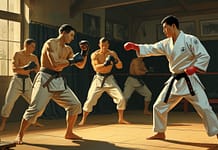
Japanese Karate had a major influence on the evolution of French Savate fighting during the 20th century. Through military exchanges, martial arts schools, and international competition, Karate striking methods, discipline, and training structure helped modernize Savate into the powerful kickboxing system we know today. This article explores the real history, technical crossover, and lasting impact of Karate on Savate combat.
How Japanese Karate Influenced French Savate Fighting
French Savate and Japanese Karate come from very different cultures. Savate grew out of French street fighting and boxing in the 1800s. Karate developed in Okinawa and Japan as a disciplined striking martial art focused on power, control, and precision.
Even though these systems started far apart, they eventually crossed paths. During the 20th century, Japanese Karate had a strong influence on how Savate trained, organized itself, and refined its striking techniques. Today, many Savate fighters unknowingly use ideas that came directly from Karate.
Let’s explore how this happened.
A Quick Look at Savate’s Origins
Savate began in France as a rough street fighting style called la savate, meaning “old shoe.” Fighters used kicks with heavy shoes and mixed in hand strikes similar to boxing. Sailors also added kicks learned from dockside fighting in Marseille.
By the late 1800s, Savate became more organized and safer. It combined:
- Precise kicking techniques
- Western boxing punches
- Structured training and competition rules
This version became known as Savate Boxe Française.
Still, early Savate was mostly European in style. That began to change after World War II.

How Karate Entered France
After World War II, Japanese martial arts began spreading across Europe. French soldiers, police officers, and athletes were exposed to Karate and Judo through:
- Military exchanges and training programs
- Japanese instructors traveling to Europe
- International martial arts demonstrations
- The rise of martial arts schools in France
One of the most important figures was Henry Plée, often called the father of Karate in France. He opened one of the first Japanese martial arts dojos in Paris in the 1950s and invited top Japanese masters to teach.
As Karate schools grew, many Savate fighters and coaches became curious about Karate’s powerful striking, discipline, and body mechanics.
Karate’s Influence on Savate Striking Techniques
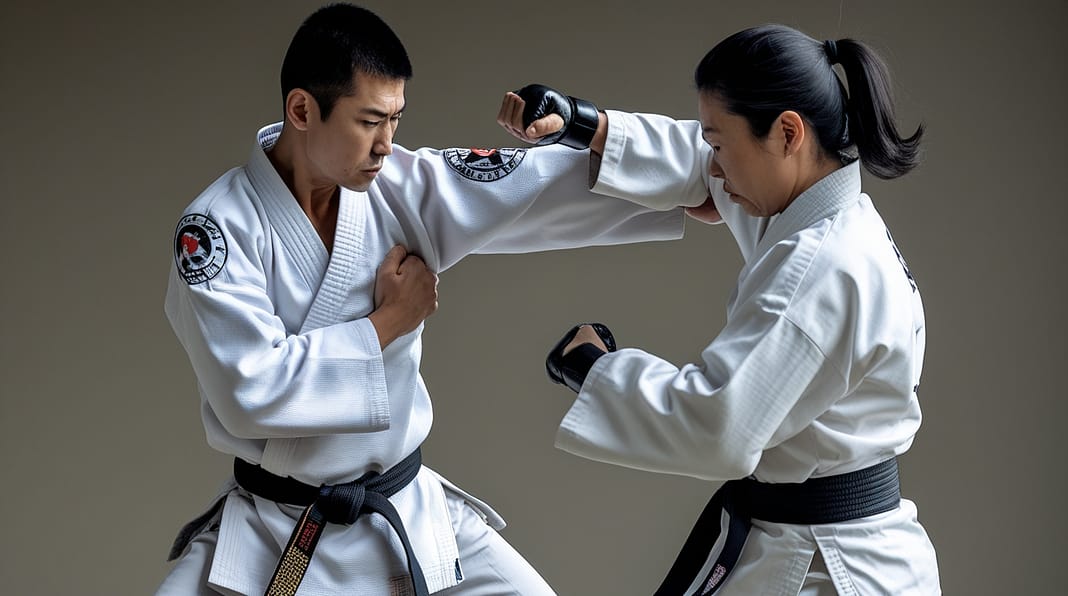
One of the biggest impacts of Japanese Karate on Savate fighting was how strikes were delivered and controlled.
Karate emphasized:
- Strong hip rotation for power
- Clean body alignment
- Tight guard positions
- Explosive straight punches and kicks
- Sharp snap and recoil
Savate fighters began adopting these ideas to improve:
- Kick speed and accuracy
- Balance during striking
- Punch structure and power
- Defensive positioning
While Savate kept its unique shoe kicks and fluid movement, many modern Savate fighters now use Karate-style mechanics to generate cleaner strikes.
This crossover made Savate more efficient and competitive as a striking system.
Training Structure and Belt Systems
Traditional Savate originally did not use belt rankings like Japanese martial arts. Karate introduced a clear system of belts, discipline, formal classes, and structured progression.
French martial arts schools began adopting:
- Ranking systems
- Formal grading tests
- Standardized curriculum
- Instructor certification programs
This helped Savate grow as a professional sport and teaching system. It became easier to train students consistently and maintain quality standards nationwide.
Kata Influence and Technical Drills
Karate uses kata, which are solo movement forms that train technique, balance, and timing. While Savate does not use kata exactly, it adopted similar ideas:
- Shadowboxing drills
- Patterned footwork sequences
- Controlled technique repetitions
- Balance and posture training
These drills helped fighters sharpen precision instead of just relying on sparring alone.

Military and Self-Defense Cross-Training
During the Cold War era, European military and police units studied Japanese martial arts for close-combat efficiency. Karate’s direct strikes, fast reactions, and mental discipline blended well with Savate’s practical street defense roots.
Many instructors trained in both systems and passed this blended knowledge into civilian gyms.
This cross-training strengthened Savate as a realistic self-defense art, not just a sport.
Sport Competition and Kickboxing Evolution
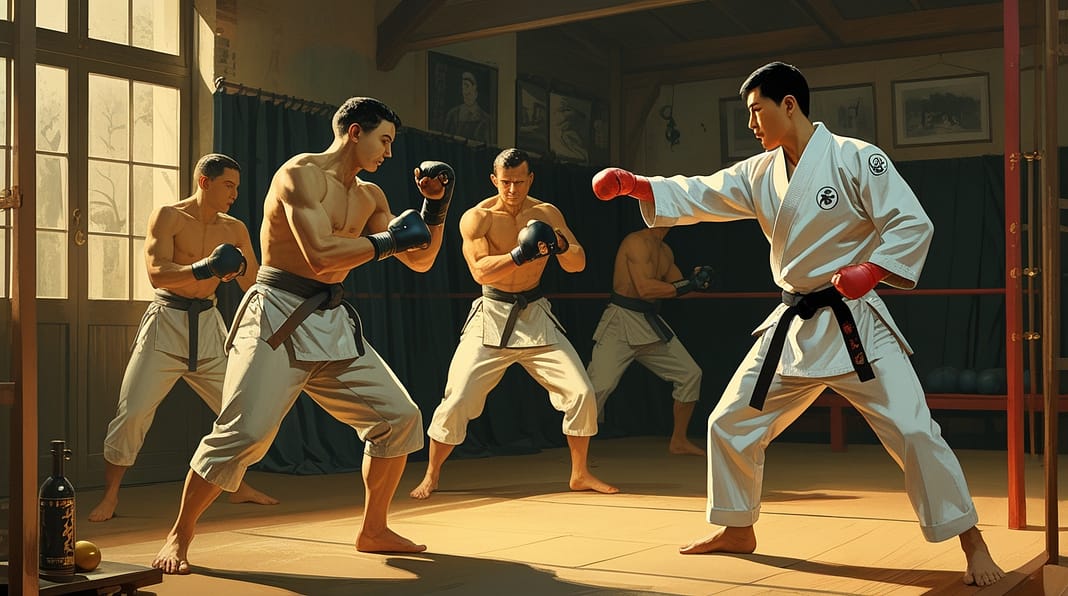
As kickboxing grew globally in the 1970s and 1980s, Karate fighters and Savate fighters began competing against each other. This forced both systems to evolve.
Karate brought:
- Strong straight punches
- Fast counter striking
- Tight footwork control
Savate contributed:
- Advanced kicking angles
- Fluid movement
- Boxing combinations
The exchange pushed Savate closer to modern kickboxing standards while still preserving its unique identity.
What Makes Savate Still Unique Today
Even with Karate influence, Savate remains its own art. It still features:
- Shoe-based kicks
- Elegant footwork
- Long-range control
- French boxing combinations
- Tactical movement
Karate helped sharpen Savate, not replace it.

Why This Cross-Cultural Influence Matters
The influence of Japanese Karate on French Savate fighting shows how martial arts grow through shared knowledge. No fighting system evolves alone. When cultures exchange ideas, fighters become more skilled, safer, and more effective.
Savate today stands as a powerful blend of European tradition and Japanese striking science.
For martial artists, this reminds us that learning across styles builds stronger fighters and deeper understanding.
Final Thoughts
The history of Karate’s influence on Savate proves that martial arts are living systems. Through military training, international instructors, sport competition, and technical exchange, Karate helped modernize Savate’s striking power, training structure, and discipline.
Today’s Savate fighters benefit from this blend of precision, balance, and control — a perfect example of how East and West shaped modern combat sports together.
Whether you train Savate, Karate, or both, understanding this connection deepens respect for the art and its evolution.