Kyokushin Kai Karate is a full-contact, bare-knuckle style created by Mas Oyama, one of the toughest martial artists in history. This article explains the origins of Kyokushin, the training methods, the styles that influenced it, and why it is considered one of the best martial arts for discipline, strength, and real-world self-defense.
Introduction
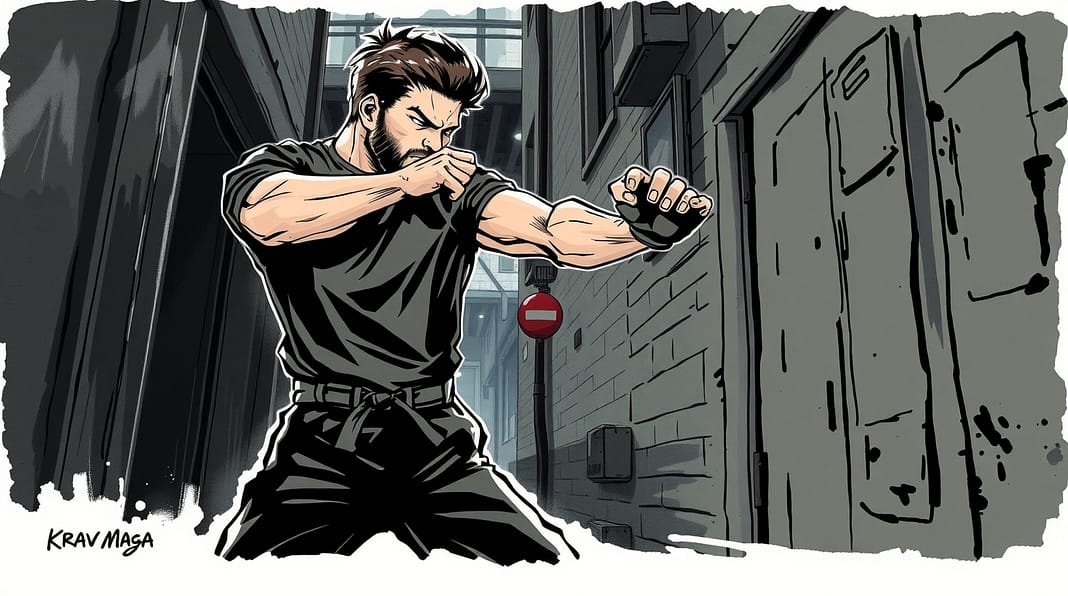
Kyokushin Kai Karate is often called the toughest karate style in the world. It was created by the legendary martial artist Masutatsu Oyama, a man known for his incredible strength, discipline, and full-contact fighting spirit. Kyokushin is famous for bare-knuckle sparring, powerful strikes, and a training system designed to build both the body and the mind.
In this article, we look at where Kyokushin came from, what styles influenced it, how students train, and whether it is a good style for self-defense in real life today.
The Origins of Kyokushin Karate
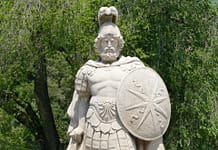
Mas Oyama was born in Korea in 1923 and moved to Japan when he was young. He began training in martial arts at a very early age. Oyama trained in many different styles before creating Kyokushin. The main arts that influenced him were:
Shotokan Karate
He trained under Gichin Funakoshi in his early days. This gave Oyama a strong foundation in basic karate techniques, stances, and kata.
Goju-Ryu Karate
Oyama later studied Goju-Ryu under So Nei Chu, who had a huge influence on him. Goju-Ryu contributed the hard conditioning, circular movements, and breathing methods found in Kyokushin.
Judo
Oyama earned a 4th-dan black belt in Judo, which helped him understand grappling, throws, and body control.
Other influences
He also studied Chinese martial arts, old Okinawan methods, and sword training. He combined the strongest parts of each system into one complete style.
All of these elements came together in 1953 when Mas Oyama officially founded Kyokushin Karate, which means “The Ultimate Truth.”
The Philosophy of Kyokushin
Kyokushin isn’t just about fighting. It teaches:
- discipline
- respect
- perseverance
- pushing past your limits
- developing a strong spirit
The word “Osu” is used in Kyokushin to show respect and strong will. It represents the idea of pushing forward no matter how difficult the challenge is.

How Kyokushin Students Train
Kyokushin training is known for being very tough. Students work on:
1. Kihon (Basics)
Punches, blocks, kicks, stances, and footwork repeated thousands of times to build strong technique.
2. Kata (Forms)
Traditional patterns that teach balance, timing, and precision.
3. Kumite (Sparring)
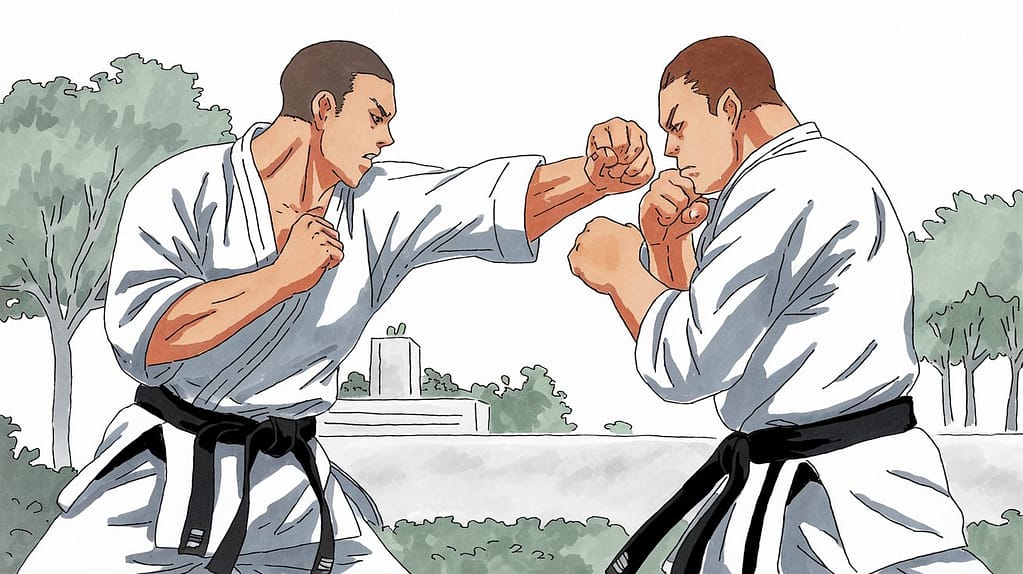
This is where Kyokushin becomes famous. Sparring is usually full-contact and bare-knuckle, with no punches to the face allowed, but everything else is fair game. Fighters use:
- full power
- real body shots
- hard low kicks
- knee strikes
- close-range pressure
4. Strength and conditioning
Kyokushin conditioning is legendary. Students toughen their shins, arms, and core through:
- body conditioning drills
- sandbag work
- endless repetitions
- partner drills
- makiwara striking posts
The training builds a fighter who can take a hit and keep going.
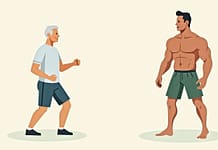
Can People of All Ages Train in Kyokushin?
Yes — Kyokushin has students from young children all the way to seniors.
- Kids learn discipline, focus, and confidence.
- Adults build strength, fitness, and real fighting skill.
- Older practitioners can work at a slower pace with lighter contact.
The training can be adjusted to fit anyone’s age or ability.
Kyokushin can be very intense, but beginners always start slow and build up safely.
Is Kyokushin Good for Street Self-Defense?
es, Kyokushin is considered one of the better karate styles for real-world self-defense. Here’s why:
- Students learn to hit hard.
- Conditioning makes them able to take hits without freezing.
- Low kicks and body shots are very effective in real fights.
- Aggressive forward pressure works well against attackers.
- Students develop strong footwork and balance.
Kyokushin fighters do not rely on fancy moves. They use simple, powerful techniques that work under pressure.
However, since Kyokushin does not allow punches to the face in sparring, many fighters cross-train in boxing or Muay Thai later on.

What Techniques Does Kyokushin Favor?
Kyokushin focuses on strong, direct attacks, such as:
- low roundhouse kicks
- front kicks
- straight punches to the body
- hooks and uppercuts
- knee strikes
- powerful combinations
- heavy conditioning drills
Kyokushin techniques favor efficiency over flash. The art is known for raw power rather than high-flying or acrobatic moves.
Does Kyokushin Use High Kicks?
Yes — but not too many. Kyokushin does teach high kicks and some students are excellent at them, but the style prefers:
- low kicks
- mid-level kicks
- body punches
- close-range attacks
High kicks are used more in tournaments than in street situations.
Is Kyokushin a Kicking Style or a Punching Style?
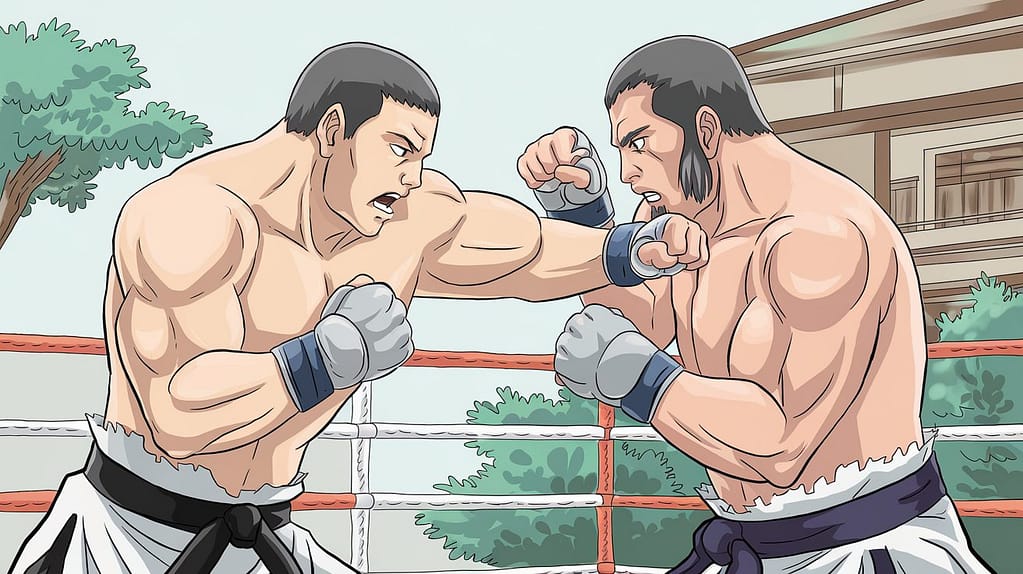
Kyokushin is known for having both powerful kicks and strong punching combinations. However:
- Kicks (especially low kicks) play a huge role, because they damage the legs of an opponent.
- Punches to the body are used heavily because face punching is not allowed in competition.
So Kyokushin ends up being a balanced striking system, with an emphasis on powerful kicking attacks.
Does Kyokushin Use Weapons?
Kyokushin itself does not focus on weapons.
Some dojos may teach:
- bo staff
- sai
- tonfa
- kama
…but these are usually added for training variety or traditional practice. They are not part of the main Kyokushin curriculum.
Kyokushin’s core identity is bare-handed, full-contact karate.
Conclusion
Kyokushin Kai Karate is one of the most respected, demanding, and inspiring martial arts in the world. Created by Mas Oyama through years of intense training and study, Kyokushin has built a reputation for toughness, discipline, and real fighting skill.
Whether you are looking for self-defense, fitness, or a way to test your spirit, Kyokushin offers something powerful for everyone. It is a style that challenges you, shapes you, and pushes you to become stronger than you were yesterday.
Osu.